

Want to close more deals, faster?
Get Pod!
Fill out the form and book your demo today.
Thank you for subscribing!
Oops! Something went wrong. Please refresh the page & try again.

Stay looped in about sales tips, tech, and enablement that help sellers convert more and become top performers.

Ask ten top-performing B2B sellers how they structure their day, and you'll get ten different answers. That's not a bug. It's the beauty of the job. But are some daily game plans more effective than others? Of course.
If you feel like you've been hitting a slump in productivity, here are some ways to divide (your time) and conquer.
Sales is too variable for a universal schedule. Your deal cycle, territory, product complexity, and personal energy patterns all shape what an effective day looks like. A mid-market rep running 30 accounts needs a different rhythm than an enterprise seller working five deals over six months.
What does matter is intentionality. Top sellers don't let the day happen to them. They make deliberate choices about where their time goes and why. The structure is less important than the discipline behind it.
This is the framework for sellers who want a simple, repeatable ratio to gut-check their week. 50% of your time goes to active pipeline. This could be follow-ups, discovery calls, demos, and proposals. Thirty percent goes to prospecting, including outbound outreach, research, and new conversations. Twenty percent covers everything else: CRM updates, internal meetings, and admin.
The value here is accountability. If you look up on a Friday and you've spent 60% of your week in internal meetings, the math tells you something went wrong.
Some sellers swear by protecting their mornings for outbound. Energy is higher, inboxes are less cluttered, and decision-makers are often more reachable before the day pulls them into back-to-back meetings. Afternoons then become the space for pipeline management, follow-ups, and prep work.
This one works especially well if you're someone who does their best creative and conversational work earlier in the day. It's less about the clock and more about matching your highest-energy hours to your highest-leverage activities.
Rather than splitting by percentage or time of day, some sellers divide their day into three distinct modes. Block one is new business including cold outreach, prospecting sequences, and top-of-funnel activity. Block two is existing pipeline, meaning nurturing relationships, advancing deals, and running calls. Block three is everything operational. We're talking CRM, prep, and skill-building.
The 3-block approach is popular because it prevents context-switching. You're not bouncing between a cold call, a proposal edit, and a CRM update. You're in one mode at a time, which tends to produce better work across the board.
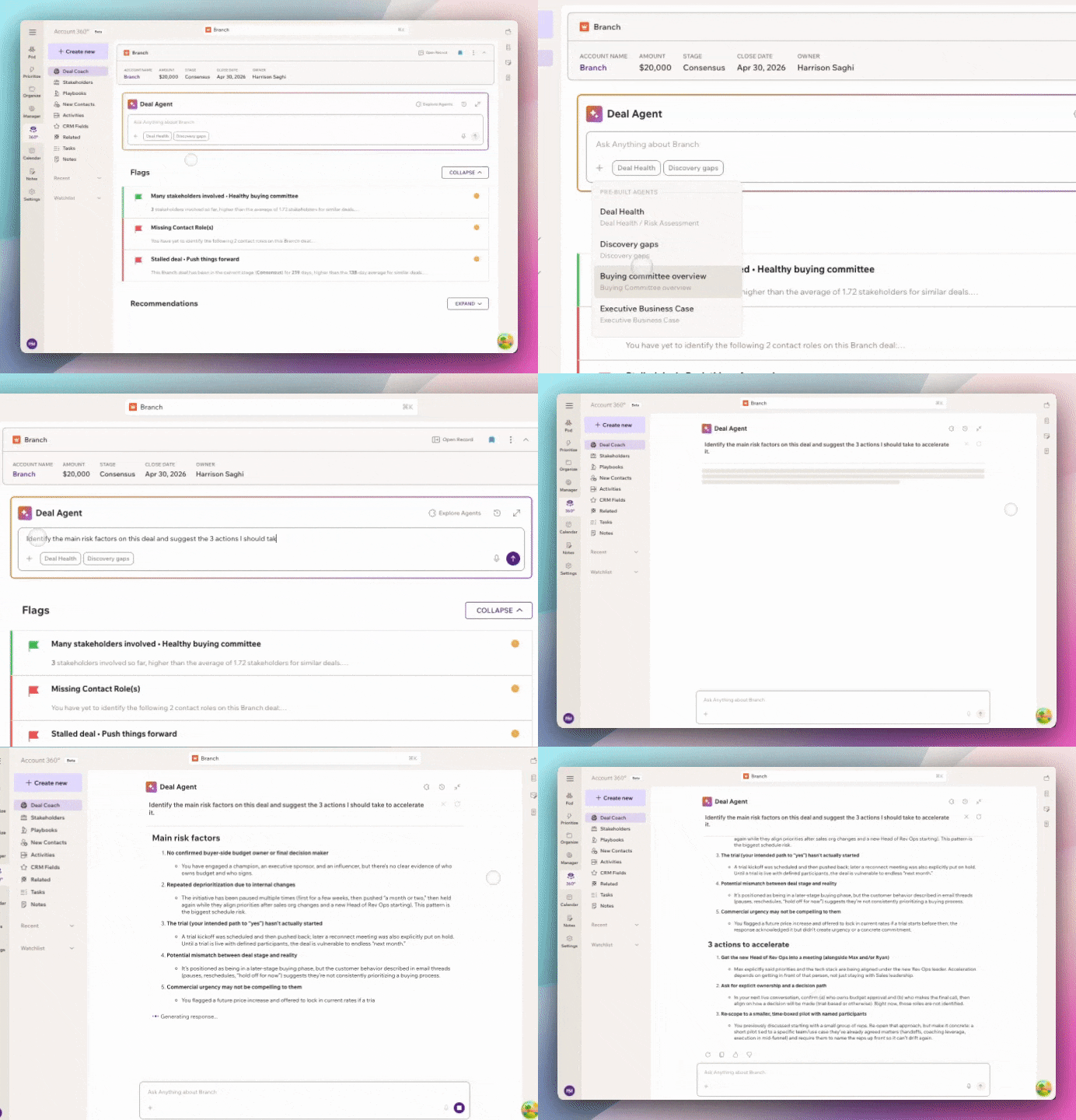
Having a framework is one thing. Executing it consistently is another. That's where most sellers waste time without realizing it.
Pod is built to help B2B sellers get more out of every block. Whether you're prospecting, running your pipeline, or prepping for a call, Pod's AI surfaces the right priorities at the right time so you're not burning your high-value hours deciding which deals to work on next. Less time managing your day. More time selling.
The best sellers already know how they want to spend their time. Pod helps make sure they actually do.
Book a demo with the Pod team to learn more about how our AI helps improve seller performance


