
.png)

Want to close more deals, faster?
Get Pod!
Fill the form and book your demo today.
Thank you for subscribing!
Oops! Something went wrong. Please refresh the page & try again.

Stay looped in about sales tips, tech, and enablement that help sellers convert more and become top performers.
Most pipeline reviews sound the same. Vague updates. Optimistic timelines. A lot of “we’re in a good spot.”
But when account executives dig deeper, the answers often fall apart.
Clarity is what separates deals that close from deals that slip. If you cannot clearly explain what is happening in your deal and why, you are not in control of it.
Use the questions below as a self-audit. If you struggle to answer any of them, you have found where your deal is most at risk.
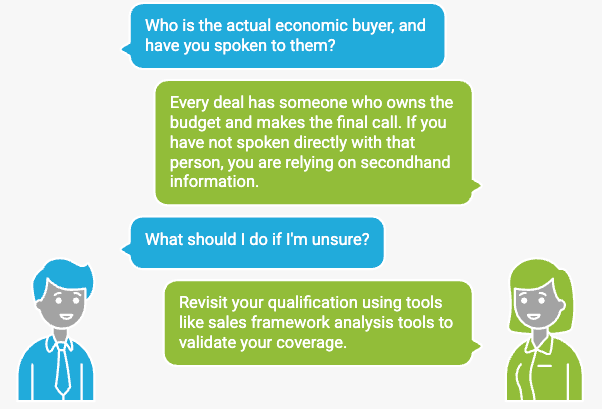
Every deal has someone who owns the budget and makes the final call. If you have not spoken directly with that person, you are relying on secondhand information.
This is a core principle in MEDDIC. You need direct access to authority, not assumptions. If you are unsure, revisit your qualification using tools like sales framework analysis tools to validate your coverage.
Hidden stakeholders are one of the biggest reasons deals stall late.
Security, procurement, finance, and adjacent teams often enter the process after you think the deal is aligned. If you have gaps in your stakeholder map, they will show up at the worst time.
Tools like stakeholder recommendations help surface who typically influences deals like yours, so you can engage them early instead of reacting late.
Silence is a signal.
In multi-threaded deals, momentum depends on consistent engagement across the committee. If key stakeholders have stopped responding or attending meetings, your deal is already weakening.
Tracking this with contact sentiment tools gives you visibility into who is leaning in and who is drifting out, so you can re-engage before it becomes a problem.
Not everyone is buying for the same reason.
If you cannot clearly articulate what success looks like for each stakeholder, your messaging is probably too generic. That makes it harder to build alignment and urgency.
A health score without context is not useful.
You should be able to explain exactly why a deal is healthy or at risk. What signals support that assessment? Engagement levels, stakeholder coverage, timeline adherence, and next steps all matter.
Tools like deal coaches can help quantify this, but you still need to interpret the signals and act on them.
Every deal has a weakest point.
It could be a lack of executive alignment, unclear ROI, missing stakeholders, or internal competition. If you cannot name the biggest risk, you cannot mitigate it.
Many late-stage losses come from risks that were visible but never addressed. This is a common pattern outlined here.
Budget is not real until it is confirmed by the person who controls it.
Hearing “we have budget” from a champion is not enough. You need validation from the economic buyer or someone with clear authority.
Your biggest competitor is often the status quo.
If the pain is not urgent or clearly quantified, doing nothing feels safer than making a change. You need a strong, explicit reason for why this deal should happen now.
If you cannot articulate that reason, your buyer probably cannot either.
Busy does not mean productive.
Every deal should have a clear, high-impact next step that moves it forward. If your next actions are vague or administrative, momentum will slow.
Pipeline intelligence tools can help prioritize the actions that actually influence deal progression.
A close date in your CRM means nothing if the buyer has not committed to it.
Shared timelines create accountability. If the buyer does not recognize or care about the date, it will slip.
Make sure the timeline is mutual, visible, and tied to real milestones.
Urgency is driven by consequences.
If nothing meaningful happens when the deal slips, there is no real pressure to move forward. You need to understand what is at stake for the buyer and make that explicit.
This is what turns interest into action.
This is the hardest question and the most important for pipeline integrity.
If you are honest, every deal has a line where it no longer deserves to be forecasted. Define that line clearly.
Strong AEs do not just add deals to the forecast. They actively remove weak ones to stay focused on what is real. For more on this, see the upcoming CRM data hygiene post once published.
Top performers are not guessing. They have clear answers to hard questions.
They know who is involved, where the risks are, and what needs to happen next. That clarity allows them to act early, adjust quickly, and close more consistently.
If you want better visibility into your deals and the actions that will move them forward, explore the pipeline coach or learn more about what to automate in your workflow here.
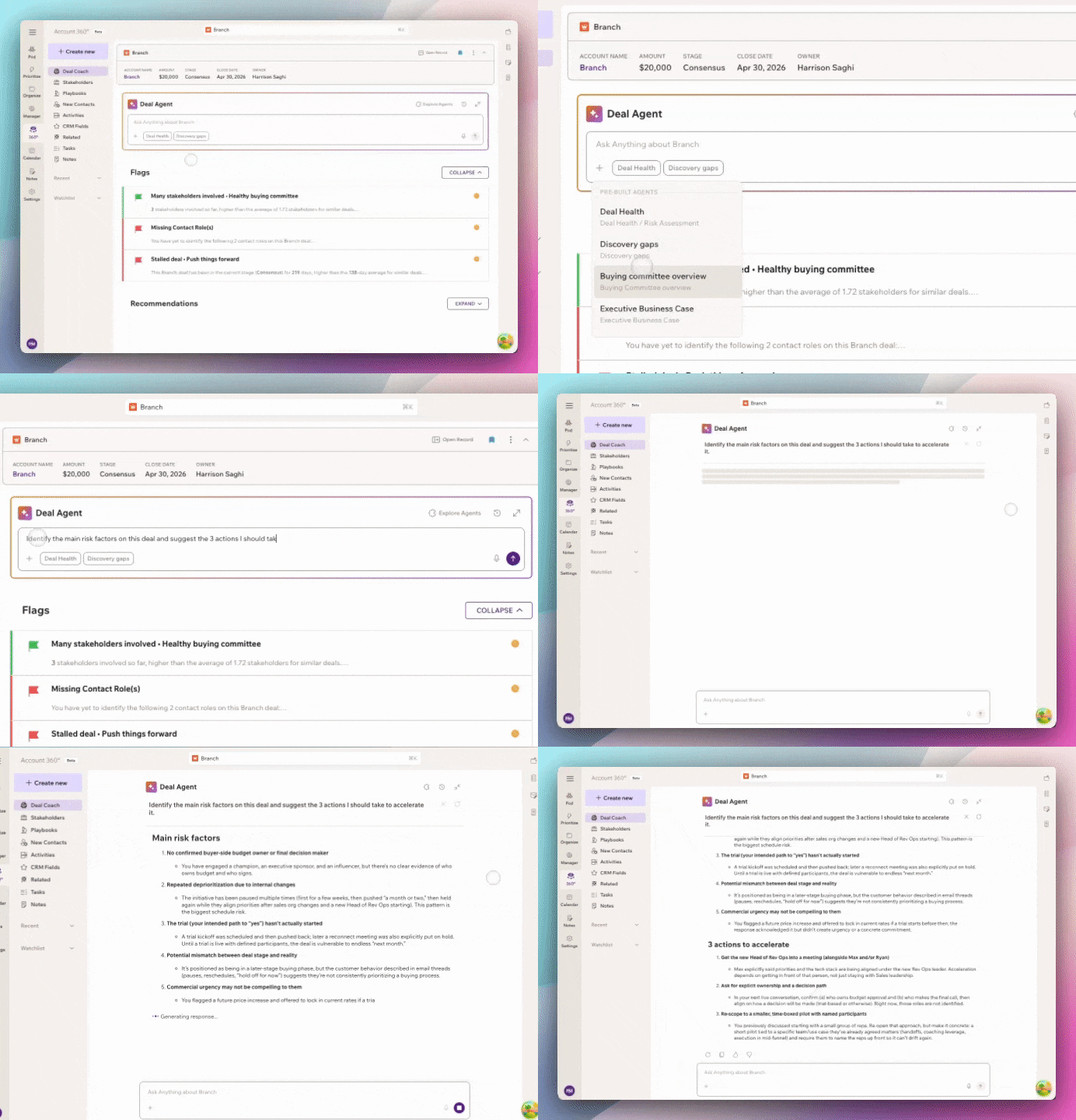
Because in complex sales, the advantage goes to the AE who understands their deals better than anyone else in the room. Book a demo with Pod today to get the tooling built for AEs that do more.


.png)


