.png)

Want to close more deals?
Get Pod!
Fill out the form and book your demo.
Thank you for subscribing!
Oops! Something went wrong. Please refresh the page & try again.

Stay looped in about sales tips, tech, and enablement that help sellers convert more and become top performers.
According to Corporate Visions' 2026 research, 86% of B2B purchases stall during the buying process. And the stalls that happen in the final stretch are the most expensive, because you've already invested the time, resources, and pipeline coverage that got you there.
These aren't beginner mistakes. They're the mistakes experienced AEs make when they trust momentum over evidence, rely on gut feel instead of signal, or assume the deal is further along than it actually is. The good news: every one of these mistakes is preventable, especially when deal intelligence agents are watching the signals you can't track manually. Here are the 10 that kill enterprise deals most often, and how to fix each one.
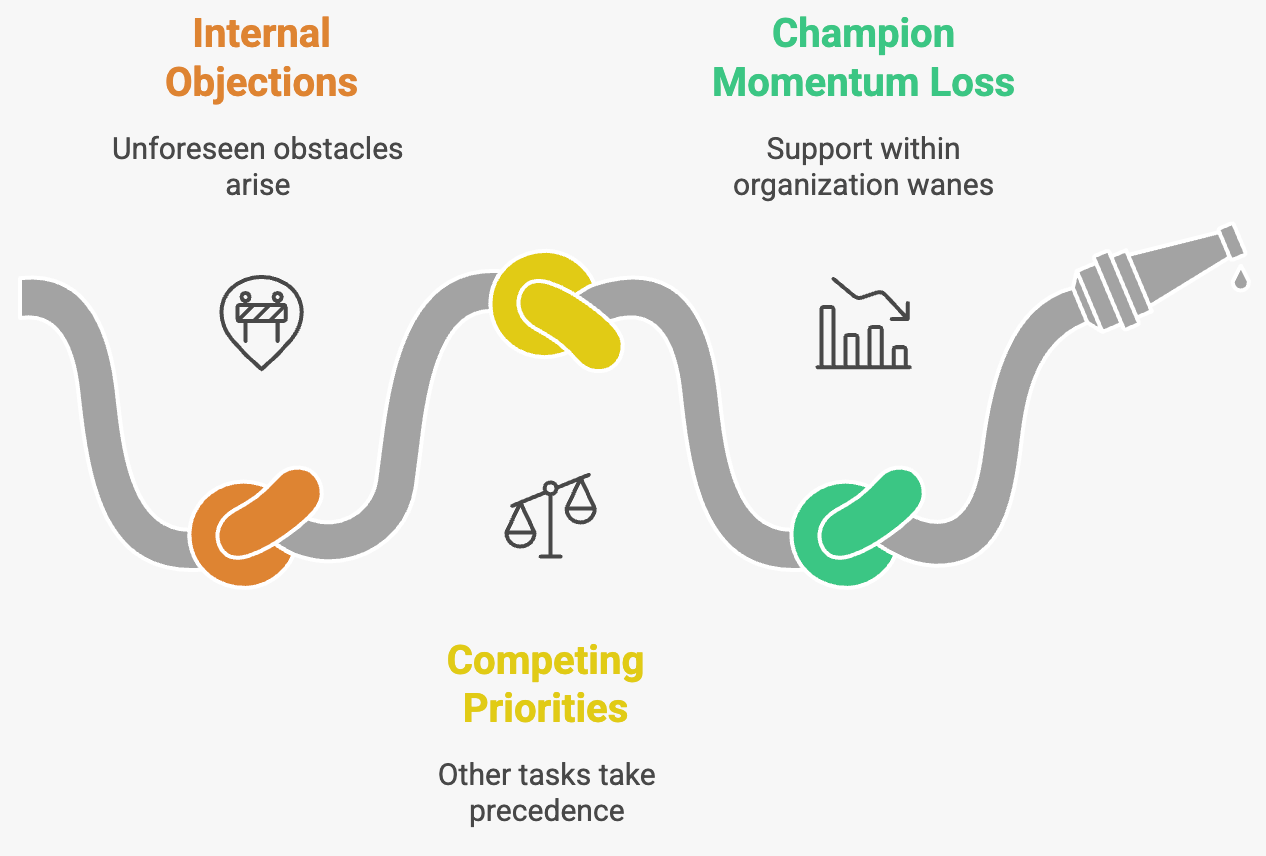
In early-stage deals, silence usually means disinterest. In late-stage deals, reps often flip that assumption: "They're quiet because they're working through internal approvals." That's rarely true. Silence in a late-stage deal almost always signals friction: an internal objection you weren't told about, a competing priority, or a champion who's lost momentum inside the organization.
The fix: Set a clear engagement baseline for every late-stage deal. If reply times extend by more than 2x, if a scheduled meeting gets canceled without a reschedule, or if your primary contact goes quiet for more than five business days, treat it as a risk signal and act immediately.
A deal intelligence agent can track these patterns across every open deal and flag drops in engagement before you notice them yourself. The alert triggers the action, not the other way around.
Enterprise buying committees now average 10 to 11 stakeholders, and in large deals that number climbs higher (LeanData, 2026, accessed 2026-04-08). Relying on a single champion to sell internally is one of the most common and dangerous mistakes in late-stage execution. Champions get reassigned, overruled, or simply lack the organizational capital to push the deal through procurement and legal alone.
The fix: Map the full buying committee before you enter late-stage negotiations, not after. Identify the economic buyer, the technical evaluator, the procurement lead, and any potential blockers. If you can't name at least three to five engaged stakeholders by the time you're in negotiation, the deal is more fragile than your pipeline suggests.
Pod's stakeholder mapping analyzes your deal contacts against historical win patterns and flag when critical roles are missing from the conversation. An agent that monitors buying committee coverage turns a blind spot into a visible gap you can act on this week.
Procurement is where late-stage deals go to die quietly. The rep thinks they're "waiting on procurement," but procurement has twelve other vendors in queue and no reason to prioritize yours. Without a mutual action plan (MAP) that both sides have agreed to, the deal timeline is controlled by whoever has the least urgency, and that's almost never you.
The fix: Build the MAP collaboratively during late-stage discovery, before the deal enters procurement. Include every step from the current stage to the signed contract, assign owners on both sides, and share it in a format the buyer's team can reference internally. Review it on every call. When a milestone slips, address it immediately rather than hoping it self-corrects.
In mid-market and enterprise deals, the signer and the economic buyer are often different people. Misidentifying this role means you're building your business case for the wrong audience.
The economic buyer cares about the total cost of ownership, competitive alternatives, and organizational risk. If you haven't had a direct conversation with this person (or at minimum, received confirmation from your champion that this person is bought in), your deal is more exposed than you think.
The fix: Pressure-test the economic buyer question in every deal review. Ask: "Have I spoken directly with the person who can say yes to this budget?" If the answer is no, that's your next action item. Use sales framework analysis to surface MEDDPICC gaps automatically. A deal intelligence agent that tracks which methodology elements have been confirmed through actual conversations (not just CRM checkbox entries) keeps this from becoming a late-stage surprise.
When a deal stalls, the first instinct for many experienced reps is to offer a discount. The logic feels sound: remove the price objection, and the deal moves. But discounting before you've confirmed the buyer's value perception does two things wrong at once. It signals that you didn't believe in your own pricing, and it reframes the conversation around cost instead of outcome.
The fix: Before any pricing conversation, confirm that the buyer can articulate the expected business impact in their own words. If they can't, that's a value gap, not a price gap. Use Pod's Deal Coach to flag deals where close dates have slipped or activity has dropped but no discount conversation has happened yet. When an agent surfaces "weak value confirmation" as a deal risk, it reframes the rep's next step from "offer a discount" to "rebuild the business case."
Enterprise deals have natural gaps: the week between a demo and a technical review, the two weeks while procurement runs a security assessment, the holiday break that falls mid-negotiation. These gaps are where momentum dies. Reps assume the deal is paused, but the buyer's attention is moving to other priorities, other vendors, or other internal projects.
The fix: Treat every gap between meetings as an active risk. Send relevant content, share a useful data point, or provide an update on a question raised in the last call. Even a short, useful note keeps the deal alive in the buyer's mind. AI-generated meeting briefs give you pre-meeting context and post-meeting follow-up points pulled from CRM, email, and transcript data, so you always have something specific and relevant to share. The brief isn't just preparation. It's your momentum insurance.
You had a great call with the VP of Engineering. She was nodding, asking good questions, and seemed genuinely excited. But "seemed excited" is not the same as "committed to advocating internally." Experienced reps often over-index on positive body language and under-index on what's happening between calls: the tone of emails, the speed of replies, and whether stakeholders are engaging with shared materials.
The fix: Track sentiment systematically, not anecdotally. Pay attention to response patterns, email tone shifts, and engagement frequency across every stakeholder, not just your primary contact. Contact sentiment tracking analyzes email and transcript data to surface sentiment changes per contact over time. When a stakeholder's engagement pattern shifts from warm to neutral, Pod surfaces the risk before the change becomes a blocker. You can course-correct in a conversation instead of discovering the problem in a lost-deal review.
Every deal needs a compelling event, a reason why the buyer needs to act now instead of next quarter or next year. In late-stage deals, reps often assume the "why now" was established during discovery and don't revisit it. But buying committees change, priorities shift, and the urgency that existed three months ago may have evaporated.
The fix: Re-confirm the compelling event in every late-stage meeting. Ask directly: "Has anything changed in your timeline or priorities since we last spoke?" If the buyer can't articulate a clear reason to move forward this quarter, treat the deal as at-risk and work with your champion to rebuild urgency. This isn't about manufacturing pressure. It's about confirming that the business case still holds.
CRM fields are backward-looking. They capture what happened, not what's happening. A deal marked "Negotiation" with a close date of this month might look healthy in a pipeline review, but the last real engagement was three weeks ago, the close date has been pushed twice, and the only activity logged is an automated email sequence.
The fix: Build a habit of questioning the CRM narrative. For every late-stage deal, ask: "What evidence do I have, from this week, that this deal is progressing?" If the answer is "the CRM says so," that's not evidence.
Deal intelligence agents pull together email activity, meeting frequency, stakeholder engagement, and sentiment data to give you a real-time picture of deal health, separate from whatever the CRM stage field says. The gap between CRM status and actual deal reality is where the biggest late-stage losses hide.
Legal and procurement teams have no incentive to prioritize your deal. They're managing dozens of contracts simultaneously. Without active, respectful engagement from the seller's side (directly or through your champion), your contract moves to the bottom of the pile. Going dark during this phase communicates that the deal isn't urgent, and the buyer's team will treat it accordingly.
The fix: Stay engaged through the entire procurement and legal cycle. Maintain a weekly cadence with your champion to get status updates. Offer to join calls with legal or procurement to answer questions directly and reduce back-and-forth. Use Pod's AI Agent Builder to create custom agents that monitor deal activity during legal and procurement phases, flagging when engagement drops or when key milestones in your mutual action plan are missed. An agent that watches the procurement timeline can surface "no activity in five days" as a risk before it becomes a stall.
Look at these 10 mistakes together and a pattern emerges. Every one of them is a failure of visibility, not skill. Experienced reps know how to sell. They know how to build relationships, run demos, and negotiate. What they can't do manually is track engagement patterns across 15 stakeholders in 20 open deals, catch subtle sentiment shifts buried in email threads, or notice that a deal's activity level dropped 40% last week.
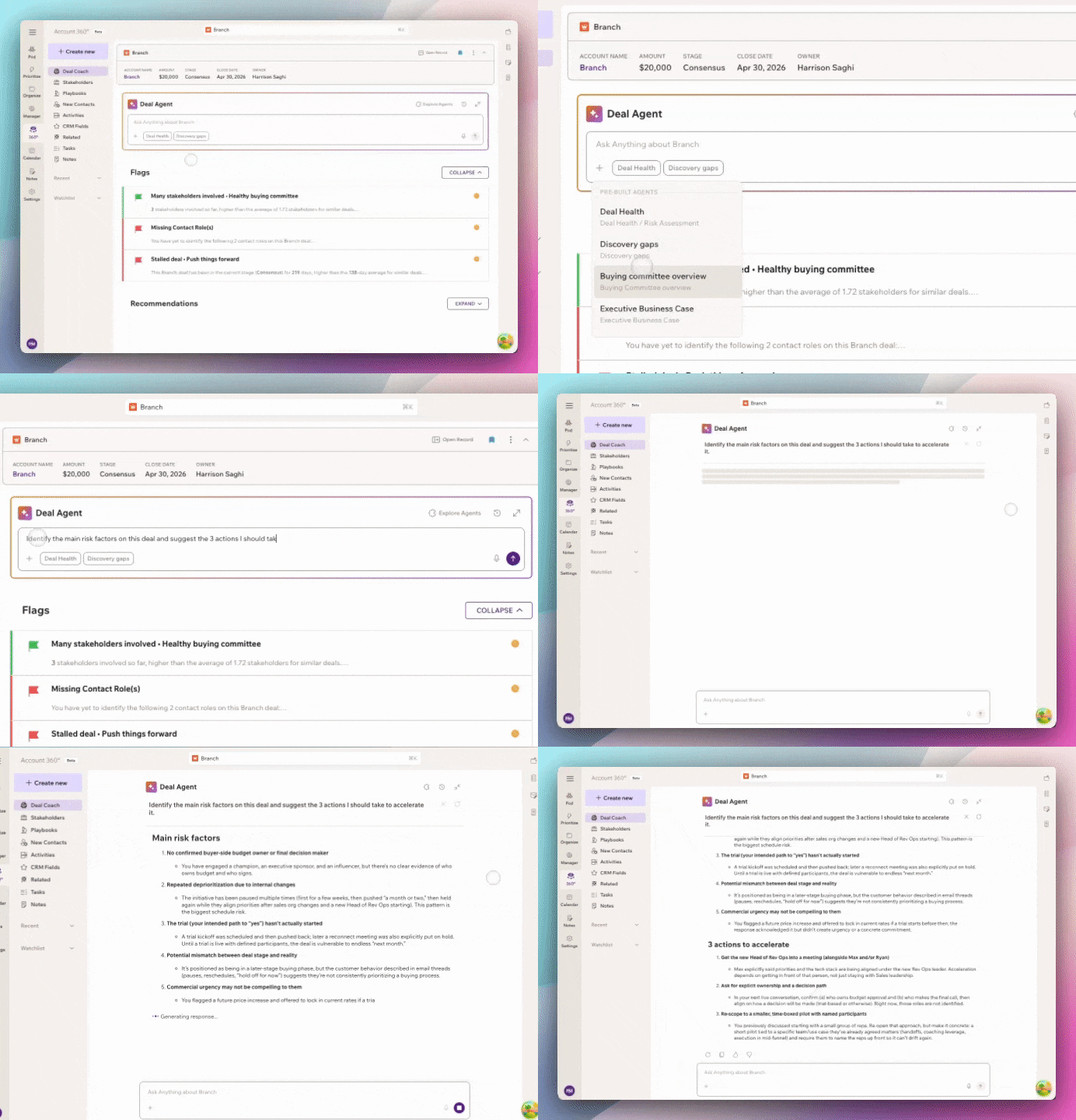
If these mistakes look familiar, your pipeline might benefit from a second set of eyes. Pod's Deal Coach analyzes every open deal for risk signals, recommends specific next steps, and helps you focus on the actions that actually move deals forward.
Book a Demo to see how deal intelligence agents work on your real pipeline data.