

Want to close more deals, faster?
Get Pod!
Fill out the form below to book your demo.
Thank you for subscribing!
Oops! Something went wrong. Please refresh the page & try again.

Stay looped in about sales tips, tech, and enablement that help sellers convert more and become top performers.
The role of the B2B leader is changing again. After several years of rapid experimentation, tightening budgets, and shifting buyer behavior, one thing is clear. Winning in 2026 will not be about doing more. It will be about doing fewer things exceptionally well.
The modern B2B leader’s playbook centers on fewer priorities, clearer systems, and more tactical coaching. Leaders who embrace this shift will build teams that perform consistently, even as markets remain unpredictable.
Sales reps are no longer operating alone. In 2026, high-performing reps will function as managers of AI agents that help them research accounts, track deal progress, and surface risks inside their pipeline.
Leadership focus will shift toward helping reps take ownership of how these agents are used. The goal is not automation for its own sake. It is enabling reps to make better decisions, faster, with clearer visibility into what matters most in each deal.
Sales management priorities have evolved. In 2026, the strongest leaders will spend less time policing activity levels and more time coaching against deal risk.
Instead of asking how many calls were made, managers will ask:
This shift allows managers to focus on deal quality and outcomes, not surface-level activity.
Modern buying committees are larger, more cautious, and more cross-functional. In 2026, sellers and leaders will focus less on basic multithreading and more on true consensus-building.
This means understanding stakeholder incentives, mapping influence across the buying group, and aligning value with multiple priorities simultaneously. Leaders who coach this skill will help their teams navigate complexity without slowing down the deal.
Sales organizations are moving away from headcount-driven growth. In 2026, leaders will prioritize keeping teams lean while investing heavily in skill development and performance improvement.
Instead of adding more reps, leaders will focus on helping existing sellers operate at a higher level. This approach reduces ramp time, preserves culture, and creates more predictable revenue outcomes.
Tool adoption is no longer optional. In 2026, leaders will demand that every tool in the tech stack prove its value.
Purchasing decisions will be driven by clear return on investment, ease of adoption, and measurable impact on seller effectiveness. Leaders will prioritize tools that improve execution and insight, not just reporting or surface-level analytics.
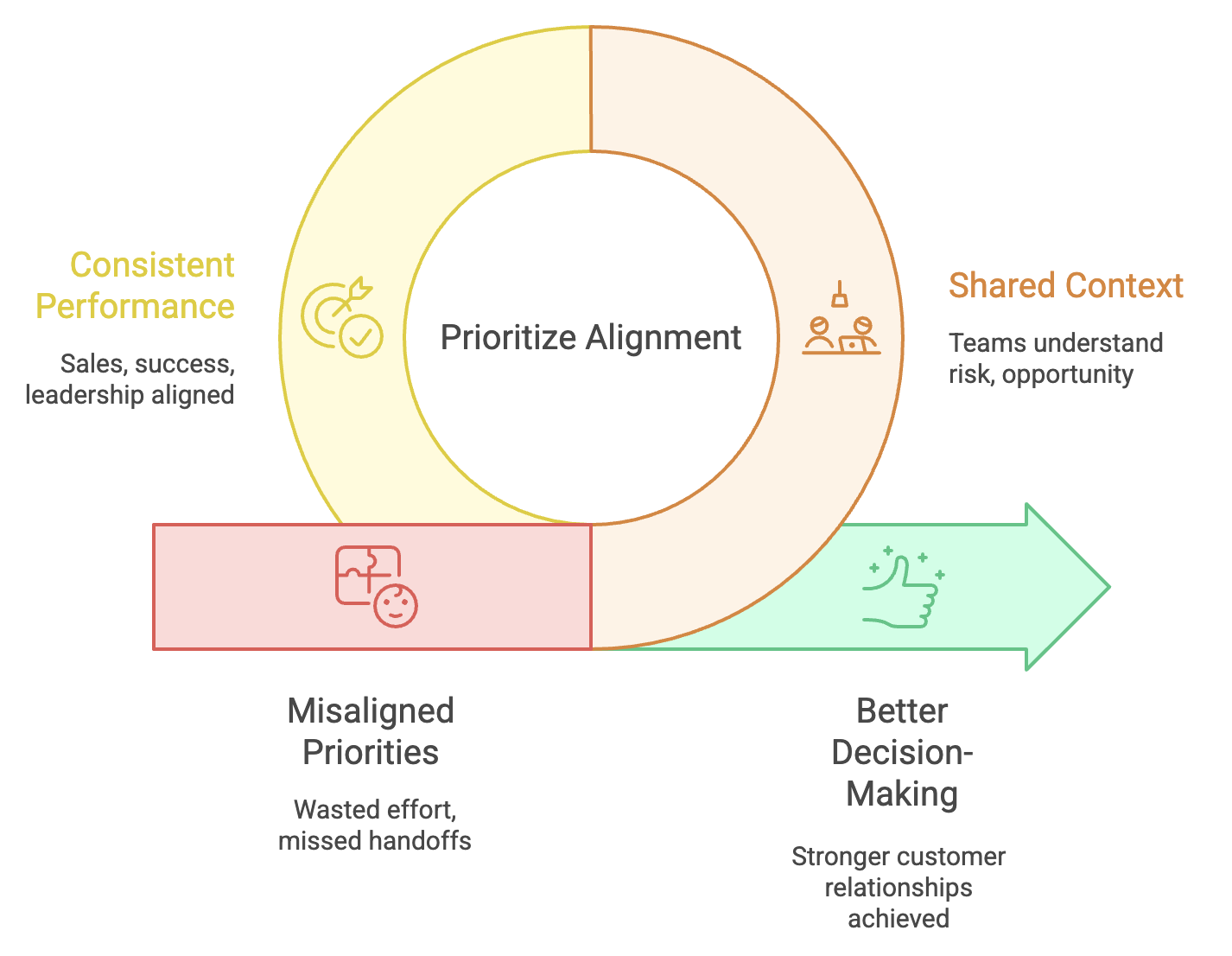
For years, speed was treated as a competitive advantage. In 2026, alignment will matter more.
When teams move fast without shared context, execution breaks down. Misaligned priorities create wasted effort, missed handoffs, and fragile pipelines. Alignment ensures that sales, customer success, and leadership are working toward the same outcomes with the same understanding of risk and opportunity.
Leaders who prioritize alignment will see better decision-making, stronger customer relationships, and more consistent performance across teams.
Autonomous teams are not unmanaged teams. They are teams equipped with clear expectations, shared context, and the right tools to make informed decisions.
In 2026, leaders will design systems that enable sellers to self-diagnose issues, prioritize their pipelines, and course-correct without waiting for constant approval. This autonomy increases accountability and frees leaders to focus on strategy and coaching rather than day-to-day oversight.

Pod gives leaders visibility into real execution, not just dashboards. It delivers AI-powered insights that help sellers improve their performance through deal coaching and pipeline prioritization.
By surfacing risk, aligning teams around shared context, and enabling better decision making at the rep level, Pod helps leaders build disciplined, high-performing teams without adding headcount or unnecessary process.
In 2026, the best leaders will not rely on instinct alone. They will rely on systems that make great execution repeatable. Book a demo today to learn more.