


Want to close more deals, faster?
Get Pod!
Fill out the form below to book your demo.
Thank you for subscribing!
Oops! Something went wrong. Please refresh the page & try again.

Stay looped in about sales tips, tech, and enablement that help sellers convert more and become top performers.
For years, sales data management was treated as a hygiene issue. Leaders talked about clean CRMs, better documentation, and stronger data discipline, but rarely positioned data as a strategic advantage. In 2025, that changed.
As teams stayed leaner and buyers became harder to engage, leaders realized something important. Data was no longer just a record of what happened. It became one of the most powerful levers for improving execution, consistency, and growth.
CRM data, content, and deal context moved from background operations into the core of modern revenue leadership.
In 2025, many revenue teams faced the same challenge. Their CRM was technically full, but functionally useless.
Critical information lived everywhere. Notes were scattered across call recordings, Slack messages, emails, spreadsheets, and personal documents. Deal context existed, but it was fragmented. Reps knew what was happening in their own deals, but managers and adjacent teams struggled to see the full picture.
This data leakage created several problems:
Even strong sellers felt slowed down. They spent more energy maintaining systems than advancing deals. Leadership teams felt the impact in missed forecasts, inconsistent execution, and longer sales cycles.
The issue was not a lack of data. It was a lack of usable data.
By mid 2025, leading organizations began to reframe the problem. Instead of asking reps to update systems more often, leaders asked a different question. What if data itself were treated as infrastructure?
Infrastructure is designed to be reliable, accessible, and foundational. When data and content are treated this way, they stop being optional or reactive. They become embedded in how teams work.
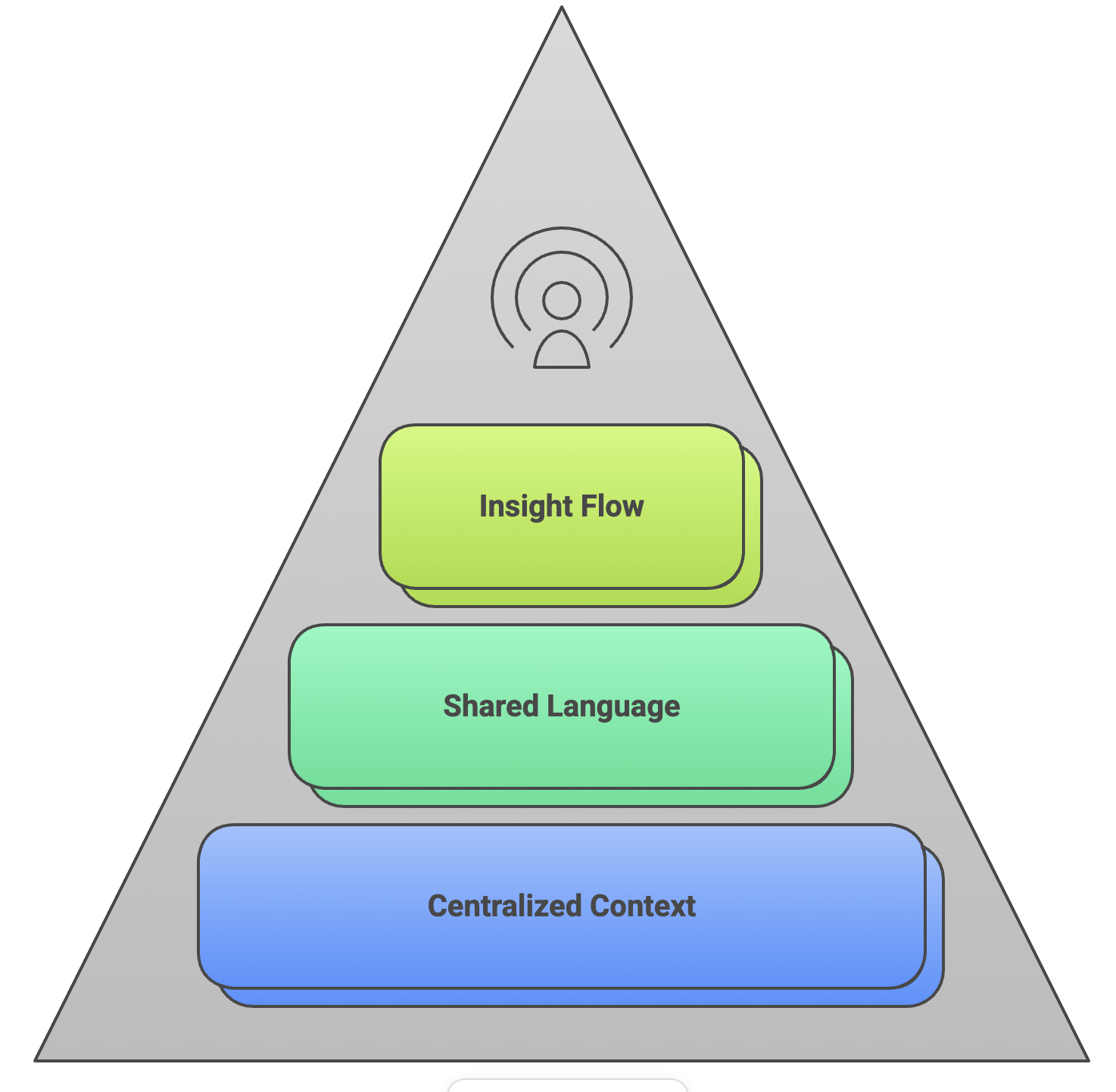
Leaders who made this shift focused on:
Rather than viewing CRM hygiene as compliance, they treated data quality as an execution enabler. The goal was not perfect records. The goal was clarity at decision points.
This mindset change reduced friction immediately. Reps spent less time updating fields and more time acting on insight. Managers trusted what they saw. Teams aligned around the same source of truth.
As headcount growth slowed, data management took on new importance. Leaders could no longer rely on more people to compensate for inefficiency.
Well-managed data became a force multiplier.
When deal information was structured, searchable, and up to date, teams could move faster without cutting corners. Sellers prioritized better. Managers coached more precisely. Leaders identified patterns across deals instead of reacting to isolated anecdotes.
Strong data systems allowed organizations to:
In this environment, data was not about reporting. It was about leverage.
Consistency is one of the hardest things to achieve in revenue organizations. Performance often varies widely across reps, quarters, and segments.
In 2025, leaders who achieved consistency shared one trait. They turned raw data into insight that guided behavior.
Insight requires more than dashboards. It requires context. Leaders needed to understand why deals moved forward or stalled, not just whether they closed.
When data was organized around decisions rather than fields, patterns emerged. Leaders could see which qualification criteria mattered most, where deals slowed, and which behaviors correlated with success.
This allowed teams to adjust in real time. Coaching improved. Forecast accuracy increased. Performance became more predictable because decision quality improved across the board.
Data management became the bridge between insight and execution.
What separated top leaders in 2025 was not access to more data. It was their ability to make data useful.
They did not ask teams to work harder at documentation. They redesigned systems so that capturing and accessing context occurred naturally within the workflow.
This gave leaders:
Most importantly, it created trust. When data reflected reality, teams trusted the system. When teams trusted the system, they used it.
That trust became a competitive advantage.
Pod was built to solve this exact problem.

Instead of treating sales data as static records, Pod turns scattered information into a living, searchable system. It organizes deal context, surfaces insight, and connects data directly to execution.
With Pod, teams gain:
By reducing data friction and leakage, Pod helps leaders turn CRM data into a growth lever rather than an administrative burden.
In 2025, data management stopped being an operational concern and became a leadership skill.
The best leaders did not just collect information. They designed systems that made insight actionable. They treated data as infrastructure, not overhead.
As teams move into 2026, this advantage will only compound. Leaders who invest in data clarity today will build faster, smarter, and more resilient organizations tomorrow. Book a demo today to learn more.


